✅ What I Like
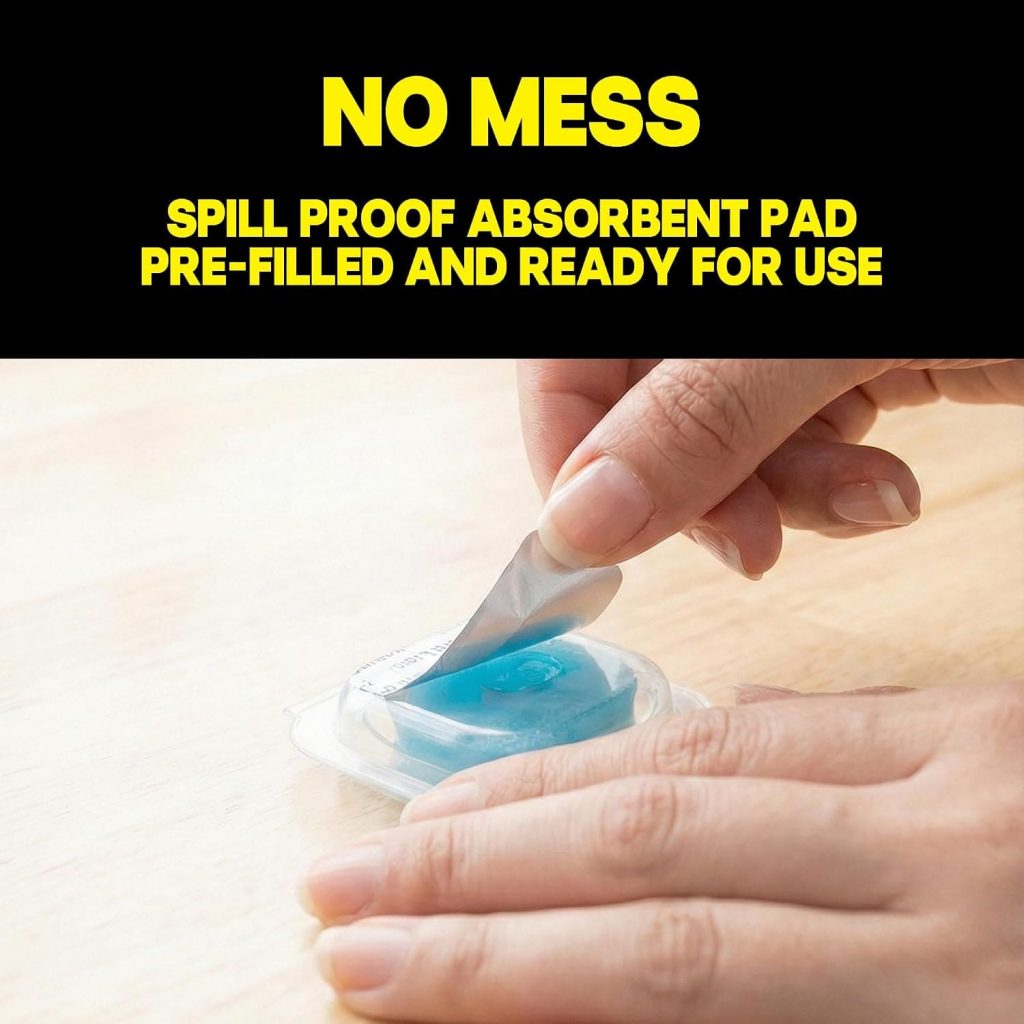
- Ready to use straight from the package
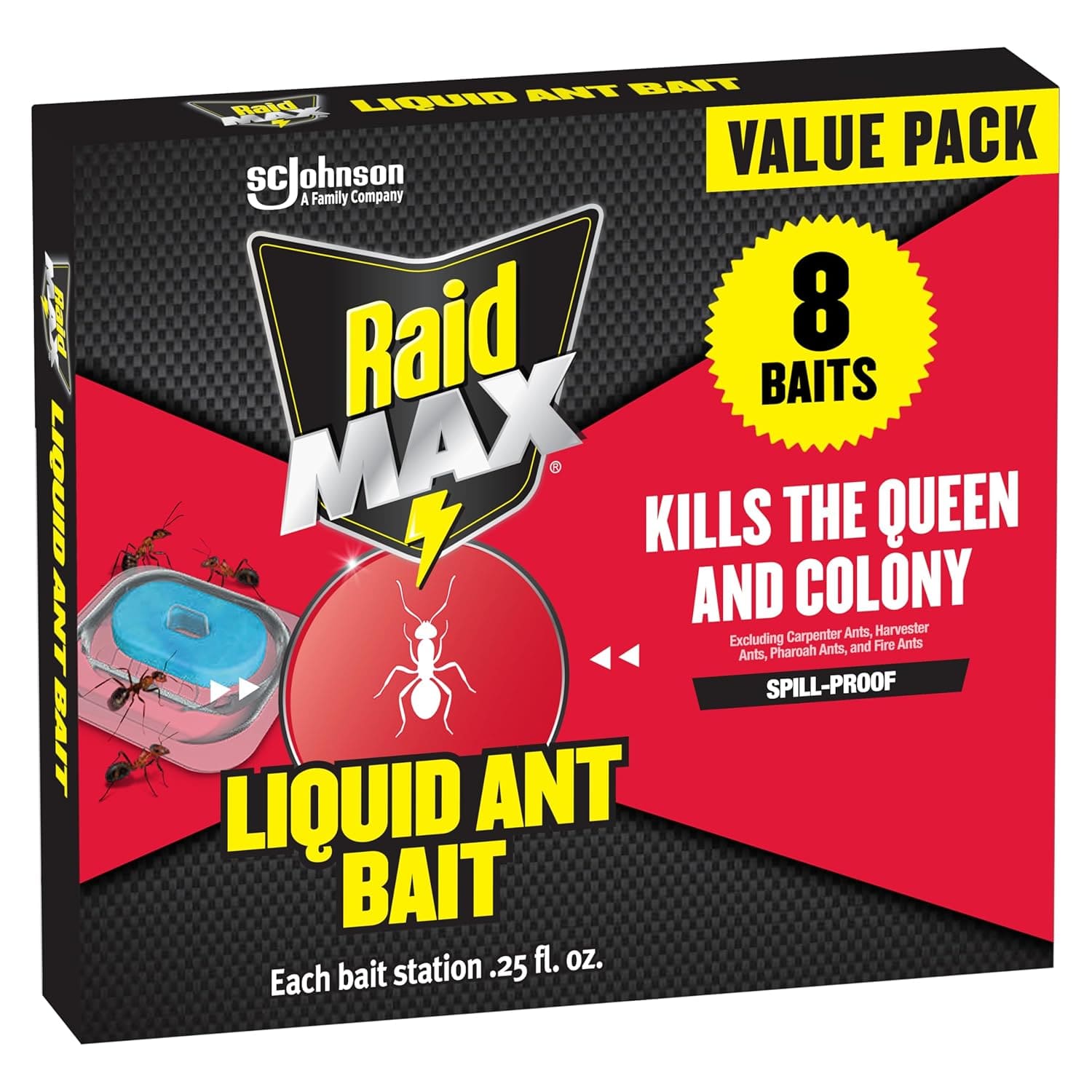
- Eight bait stations in the pack
- Liquid bait is already filled inside each station
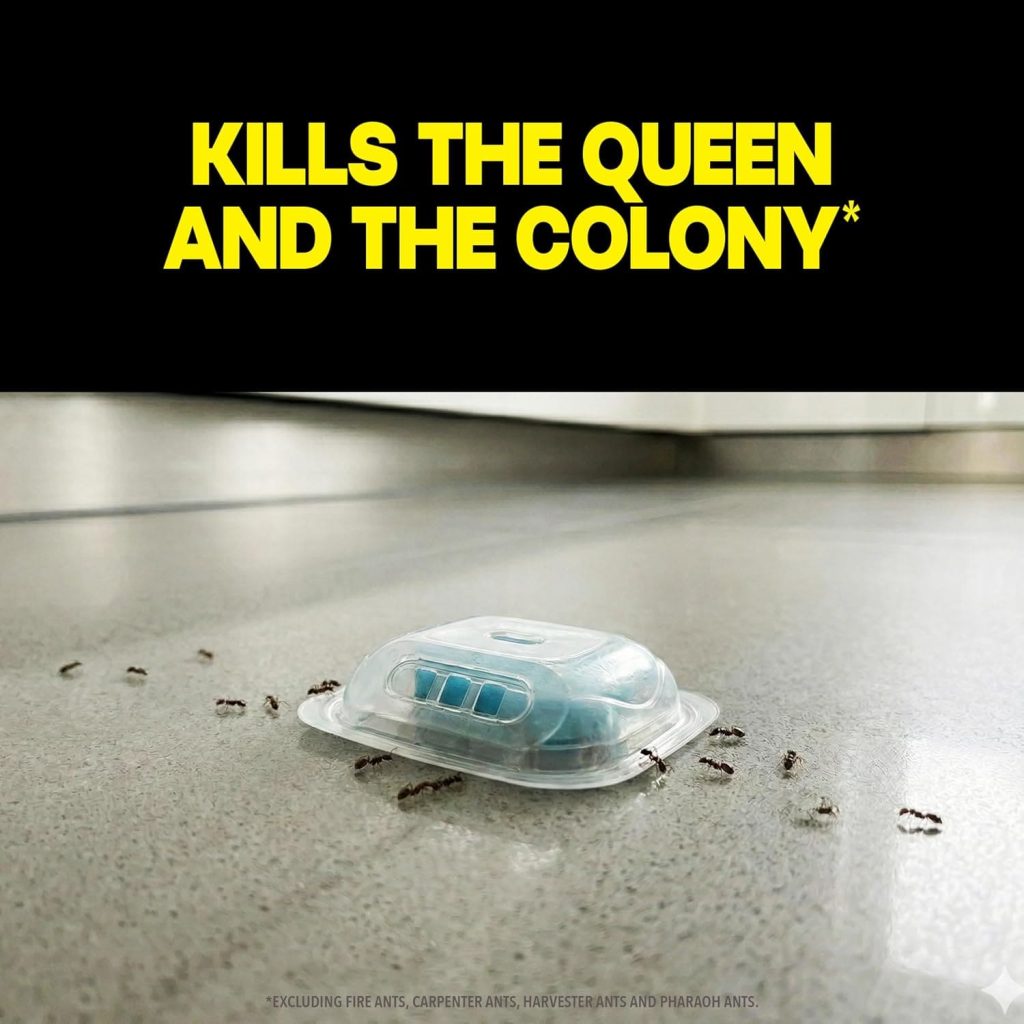
- Targets the colony instead of only killing visible ants
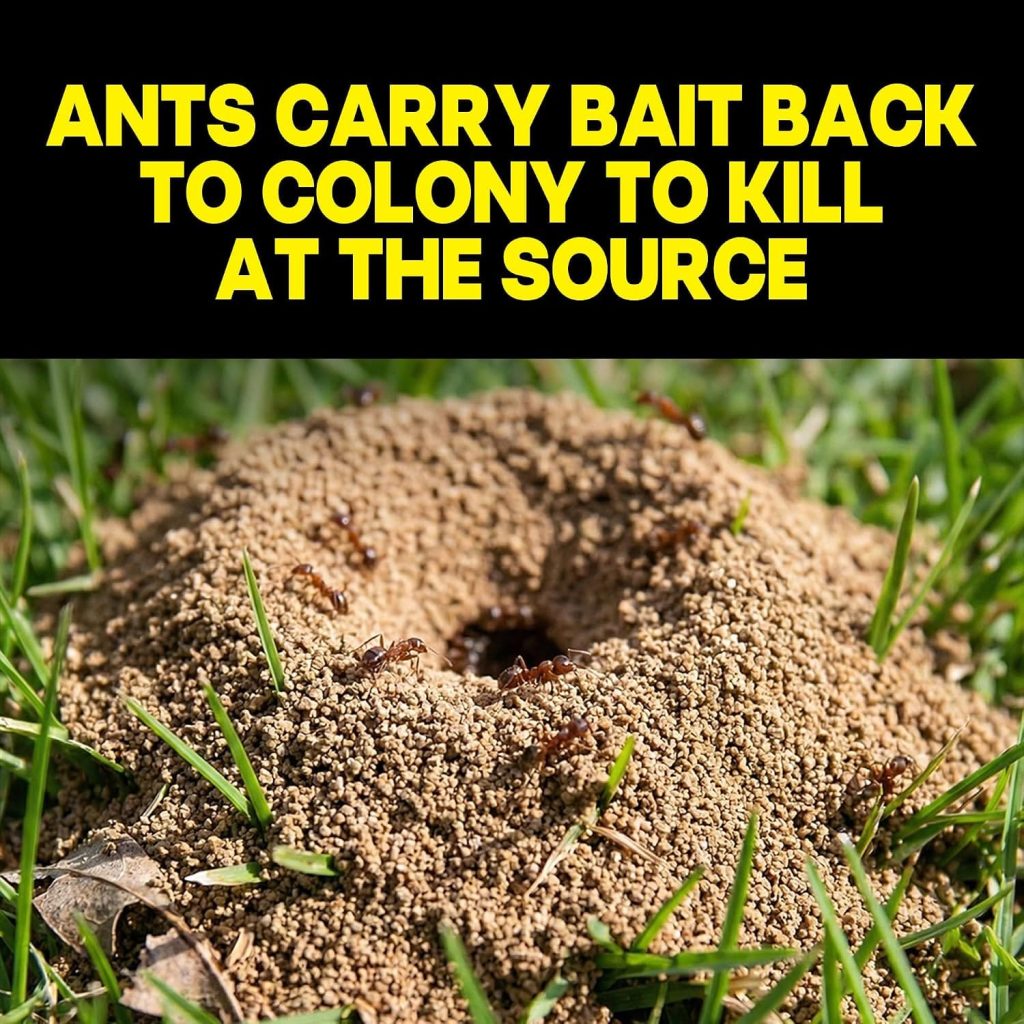
- Worker ants carry the bait back to the nest
- Bait can reach the queen, workers, and larvae
- Starts attracting listed ants within about 10 minutes when ants are present
- Raid says listed ants can be killed within 24 hours after exposure
- Uses 0.015% spinosad as the active ingredient
- Works against many common household ant species
- Small bait stations are easy to place near ant trails
- No spraying around the room
- No need to mix chemicals
- No measuring is required
- Useful around baseboards, cabinets, sinks, appliances, and other common ant areas
- The liquid remains inside a plastic bait station
- Eight stations let you cover several problem areas at once
- Can be removed after the ant problem is controlled
Raid says its Max Liquid Ant Baits use worker ants to carry the bait into the colony, where it is shared with other workers, larvae, and the queen. The current formula lists spinosad at 0.015% as the active ingredient.
❌ What I Do Not Like
- It does not control fire ants
- It does not control carpenter ants
- It does not control harvester ants
- It does not control pharaoh ants
- You may see more ants around the bait before the problem improves
- The bait must be placed on a horizontal surface
- Direct sunlight may increase liquid evaporation
- Children and pets must not be allowed to play with the stations
- It is not a product that kills every ant instantly on contact
- You need to let worker ants return to the colony
- Heavy infestations may need additional stations
- You should not move or disturb the bait unnecessarily once ants begin feeding
- Used stations cannot be refilled or reused
- Correct ant identification matters
- Outdoor-use information can be confusing
One important point is the last one. Some current retailer listings describe this eight-pack as suitable for indoor and outdoor use. However, Raid’s current official page for the original Raid Max Liquid Ant Baits gives indoor placement instructions and tells customers with outdoor ant problems to use its separate outdoor ant bait product. I would follow the instructions printed on the exact package you receive rather than relying only on a retailer title.
Buy this product from Amazon
Who Will Get the Most Value From It?
I would consider Raid MAX Liquid Ant Bait mainly for someone who keeps seeing normal household ants in places such as the kitchen, pantry, bathroom, around a sink, near windows, beside appliances, or along baseboards. It makes the most sense when killing the few ants you can see has not solved the problem. The reason is simple. A spray may kill ants walking in front of you, but a bait is designed to let worker ants take the active material back toward the colony. Raid specifically lists common ants such as pavement ants, little black ants, Argentine ants, ghost ants, odorous house ants, moisture ants, crazy ants, acrobat ants, bigheaded ants, cornfield ants, and other listed species. It is not the right product if you know you have fire ants, carpenter ants, harvester ants, or pharaoh ants.
I also think this style of product suits people who want a simple setup. You do not need a sprayer, measuring cup, or mixing bottle. The bait is already inside the station. That can make it easier to use in a normal home.
The eight-count package is also useful when ants are entering from more than one location. Instead of putting one station in one corner and hoping every ant finds it, you can place several stations near active trails while following the label.
Full Product Details
| Detail | Information |
|---|---|
| Brand | Raid |
| Product | MAX Liquid Ant Baits |
| Product Type | Pre-filled liquid ant bait stations |
| Pack Size | 8 stations |
| Active Ingredient | Spinosad |
| Active Ingredient Level | 0.015% |
| Other Ingredients | 99.985% |
| Main Target | Listed common household ants |
| Colony Action | Worker ants take bait back to colony |
| Queen Targeting | Yes |
| Worker Ant Targeting | Yes |
| Larvae Targeting | Yes |
| Ready to Use | Yes |
| Mixing Required | No |
| Measuring Required | No |
| Activation | Remove activation film before placement |
| Initial Attraction Claim | Starts working within about 10 minutes when ants are present |
| Kill Timing | Raid says listed ants can be killed within 24 hours |
| Placement | Horizontal surface |
| Direct Sunlight | Avoid when possible |
| Indoor Locations | Baseboards, corners, cabinets, under appliances, windowsills, sinks, pantries, plumbing areas, waste areas |
| Fire Ants | Not covered |
| Carpenter Ants | Not covered |
| Harvester Ants | Not covered |
| Pharaoh Ants | Not covered |
| Refillable | No |
| Reusable | No |
| Child/Pet Precaution | Do not allow children or pets to play with stations |
| Storage | Cool, dry area inaccessible to children and animals |
| Disposal | Follow label directions; do not pour unused product down drains |
These details come from Raid’s current product instructions and product information.
How I Judge the Raid MAX Liquid Ant Bait
I do not want to pretend that I personally released ants in my house and ran a laboratory-style test on this exact pack. Instead, I judge this product by looking at its current label directions, bait design, active ingredient, target species, use limits, and how it compares with other well-known ant baits.
That approach matters with pest-control products.
A bottle or fan can often be judged mainly by comfort and design.
A pesticide is different.
The label matters.
The target insect matters.
Placement matters.
And the way the active ingredient reaches the pest matters.
That is why I would not judge Raid MAX only by asking, “Did I see dead ants beside the station?”
For a colony bait, that can actually miss the main purpose.
The real goal is to let ants feed and return to the nest.
Buy this product from Amazon
🐜 The Colony-Based Design Is the Most Important Part
When people see ants in the kitchen, the natural reaction is often to kill them immediately.
I understand that reaction.
You see ten ants.
You wipe them away.
The floor looks clean.
Problem solved.
Then the next morning, another line appears.
That happens because the ants we see may only be a small part of the larger colony.
This is where a bait works differently.
Raid says worker ants consume the liquid and carry it back to the colony. There, the bait can be transferred to other workers, larvae, and the queen.
That changes how I would use the product.
If I put a station beside an active trail and ants started gathering around it, I would not immediately panic because more ants appeared.
That activity can be necessary for the bait system to work.
The workers need access.
They need time to feed.
Then they need time to return.
This is why baiting requires a little patience.
Why This Is Better Than Only Killing Visible Ants
Imagine there are fifty ants in a nest.
You see five.
You kill those five.
You may still have forty-five ants hidden away.
Now imagine the colony is much larger.
The difference becomes even more important.
A bait is designed around the ants’ own food-carrying behavior.
Instead of trying to find the hidden nest yourself, the workers help carry the bait toward it.
For me, that is the main reason to choose a bait station instead of depending only on contact spray.
It does not mean spray has no use.
It means the two products solve different problems.
A spray is useful when the goal is immediate contact kill.
A colony bait is useful when the goal is to let ants carry treatment back to hidden members of the colony.
Raid itself recommends baiting as a way to target ants where they hide and breed.
💧 Why a Liquid Bait Can Be Attractive to Household Ants
The product uses a liquid food bait.
That matters because many common household ants search for sweet food and moisture.
Raid lists sweet-feeding ants and several other common household species among the target pests.
The liquid format gives the worker ant something it can feed on and transport back.
This is different from putting a dry trap somewhere and hoping ants walk across it.
The station is built around feeding behavior.
When I look at ant bait systems, I think attraction is almost as important as the insecticide itself.
A powerful active ingredient does little if the ants never touch or eat the bait.
That is one reason I like the logic of a pre-filled liquid station.
It combines the food source and active ingredient in one controlled unit.
⚡ The “Starts Working in 10 Minutes” Claim Needs the Right Meaning
Raid says the stations can start working within 10 minutes when ants are present. It also states that listed ants can be killed within 24 hours.
I would not interpret that as:
“Your entire ant colony will disappear in ten minutes.”
That would be unrealistic.
The ten-minute claim is about ants beginning to interact with the bait.
Colony control takes time because several steps have to happen.
The ant has to:
- Find the bait.
- Feed from it.
- Leave the station.
- Return toward the colony.
- Transfer food to other ants.
- Allow the active ingredient to work.
So I would judge progress over a period of time rather than standing beside the bait with a stopwatch.
This type of bait can actually look strange at first.
You may place the station.
Then more ants appear.
That can make someone think the product is making the infestation worse.
But if ants are actively feeding, disturbing them too early may reduce the chance of bait reaching more of the colony.
🧪 Spinosad at 0.015%
Raid lists spinosad at 0.015% in the Max Liquid Ant Bait.
Spinosad is an insecticidal substance based on compounds called spinosyn A and spinosyn D. The National Pesticide Information Center describes it as a pesticide active ingredient used against a range of insects, including ants.
For the average buyer, I do not think you need to understand complex pesticide chemistry.
The practical point is simpler.
The insecticide is inside a feeding bait.
Worker ants consume the bait.
They then help move it into the colony.
That slow transport process is important.
If every worker died immediately beside the station, fewer ants could carry bait back.
So with colony bait, instant visible death is not always the best way to judge the product.
🏠 Placement Can Make or Break the Result
This is one of the most important lessons with any ant bait.
You can buy a good bait and still get disappointing results if you place it in the wrong location.
Raid recommends putting the stations where ants are already active. Its current directions mention areas such as:
- kitchen baseboards
- room corners
- cabinet corners
- under kitchen appliances
- behind kitchen appliances
- windowsills
- under sinks
- pantries
- near plumbing fixtures
- around waste containers
That is exactly how I would think about placement.
Do not hide every station in a place where no ant has been seen simply because the station looks unattractive.
Watch the ants first.
Where are they walking?
Where do they enter?
Which wall do they follow?
Are they coming from behind the refrigerator?
Are they appearing near the sink every night?
Is there a trail beside the trash area?
The better you understand the trail, the easier it is to put the bait where workers will find it.
Buy this product from Amazon
Do Not Put It Somewhere Unstable
Raid says the station should sit on a horizontal surface.
That matters because there is liquid inside.
I would not balance one at a strange angle.
I would not put one where it is constantly kicked.
I would not place it somewhere a child can easily grab.
I would also avoid a spot where water regularly splashes onto it.
The goal is to create a quiet feeding point.
☀️ Direct Sun Can Be a Problem
Raid advises avoiding direct sun because sunlight can increase evaporation of the liquid bait.
This is easy to forget.
For example, imagine ants walking along a windowsill.
You may think:
“That is exactly where I need to place the bait.”
That can be correct.
But if strong sunlight hits that windowsill for several hours every day, I would look for a nearby shaded part of the trail.
The ants still need easy access.
But the liquid should not be sitting in strong sun if you can avoid it.
📦 Eight Stations Give You More Placement Options
The eight-count pack is one of the things I like about this version.
Retail listings currently show this product as an eight-station package.
Eight stations mean you can cover more than one trail.
For example:
- two around the kitchen
- one near the sink
- one behind an appliance
- one near a bathroom plumbing area
- one near a window
- one around another active entry point
- one for a second room
That does not mean everyone should randomly scatter all eight around the house.
Placement should still follow the label.
Raid says that for thorough control, the bait stations should be placed where ants are seen and that additional stations may be needed for larger areas or heavy infestations.
The main benefit of eight is flexibility.
A single bait station may not help much if ants are entering from four separate areas.
🍽️ Why I Prefer a Station Over Open Liquid Near Food Areas
Kitchens are one of the worst places to have ants.
They have:
- crumbs
- sugar
- grease
- water
- food containers
- trash
- sinks
An open drop of pesticide would make me uncomfortable in that kind of area.
A bait station keeps the bait inside a plastic housing.
That does not mean you can ignore safety.
It does mean the liquid is more contained than an exposed puddle.
I still would not put it directly on food.
I would not allow children to handle it.
I would not allow pets to chew or play with it.
Raid specifically says children and pets should not be allowed to play with the stations.
👶 Homes With Children or Pets Need Extra Care
This part is important.
Raid says children and pets may enter areas where the product is being used when all label directions and precautions are followed, but the stations must be kept where children and pets cannot play with them.
I would take that seriously.
A small bait station can look interesting to a young child.
A dog may also chew plastic objects.
So I would think about placement from their level, not mine.
A location may look “hidden” when I am standing.
But what does it look like to a crawling toddler?
Can a cat reach it?
Can a dog push its nose under the cabinet?
Those are the questions I would ask.
For me, safe placement is part of product performance.
A bait is not useful if you cannot place it safely in your home.
🐜 Ant Species Matter More Than Many Buyers Realize
One of the biggest mistakes people make with pest-control products is assuming:
“An ant is an ant.”
That is not true when choosing treatment.
Raid specifically excludes:
- carpenter ants
- fire ants
- harvester ants
- pharaoh ants
from the target list for this product.
That is a major limitation.
Carpenter Ants
If I suspected carpenter ants, I would not simply keep adding these stations and hope for the best.
Carpenter ants can be associated with wood and structural areas.
They may need a different control strategy.
Fire Ants
This product is also not designed for fire ants.
That is especially important because fire ant colonies are often outdoors and may require products specifically labeled for that species.
Pharaoh Ants
Pharaoh ants can be difficult pests.
Again, this particular Raid bait does not list them as a target.
So before blaming the bait because nothing is happening, I would first ask:
“Am I using it against an ant species on the label?”
That small check can save a lot of frustration.
🧹 Cleaning the Area Without Ruining the Bait Strategy
I like keeping kitchens clean.
But when baiting ants, I would be careful about aggressive cleaning directly around an active station.
Imagine you put bait beside a trail.
The ants start feeding.
Then you spray a strong insecticide cleaner all around them.
You may kill the workers before they return.
You may also discourage other ants from approaching the bait.
This is why I would keep food crumbs cleaned up while giving ants clear access to the bait itself.
The bait should become the attractive food source.
I would not place a sugary spill two feet away and expect the ants to choose the bait.
Reduce competing food.
Keep the general space clean.
But avoid disturbing ants that are actively feeding from the station unless the label tells you to remove it.
Raid MAX Liquid Ant Bait VS Other Ant Baits
| Feature | Raid MAX Liquid Ant Bait | TERRO Liquid Ant Baits | Combat Max Ant Bait | Hot Shot Ultra Liquid Ant Bait |
|---|---|---|---|---|
| Form | Liquid bait station | Liquid bait | Bait station | Liquid bait |
| Raid Pack Discussed | 8 stations | Varies | 6 stations | Varies |
| Main Active Ingredient | Spinosad | Borax-based bait | Fipronil | Brand describes liquid bait technology |
| Colony Approach | Yes | Yes | Yes | Yes |
| Queen Target | Yes | Yes | Yes | Designed for colony control |
| Ready to Use | Yes | Yes | Yes | Yes |
| Raid Listed Start | About 10 minutes when ants are present | Depends on ant feeding | Starts killing overnight | Claims kill in 24 hours |
| Fire Ants | No | Depends on exact TERRO product | Combat lists fire ants | Check exact label |
| Carpenter Ants | No | TERRO has separate control options | Check label | Check label |
| Original Raid Indoor Guidance | Yes | Indoor and separate outdoor options exist | Indoor and outdoor | Check exact product label |
| Main Advantage | Spinosad liquid colony bait | Popular sweet liquid/borax approach | Up to 3-month protection claim and indoor/outdoor use | Fast liquid-bait claim |
Raid’s current official information lists spinosad at 0.015%, colony transfer, and attraction starting within about 10 minutes when ants are present. TERRO explains that its liquid ant baits use sweet liquid containing borax and sells separate indoor and outdoor bait designs. Combat Max uses fipronil, includes six stations, is labeled for indoor and outdoor placement, and claims up to three months of protection. Hot Shot describes its Ultra Liquid Ant Bait as combining a food and water source and says it delivers a lethal dose that kills in 24 hours.
Raid MAX or TERRO?
TERRO is probably one of the first alternatives I would compare with Raid.
The basic idea is similar.
Ants find a sweet liquid bait.
They feed.
They return toward the colony.
The product is meant to affect ants beyond the ones standing at the station.
TERRO says its liquid ant bait uses borax and is deliberately slow enough to allow worker ants time to return and spread the bait through the colony.
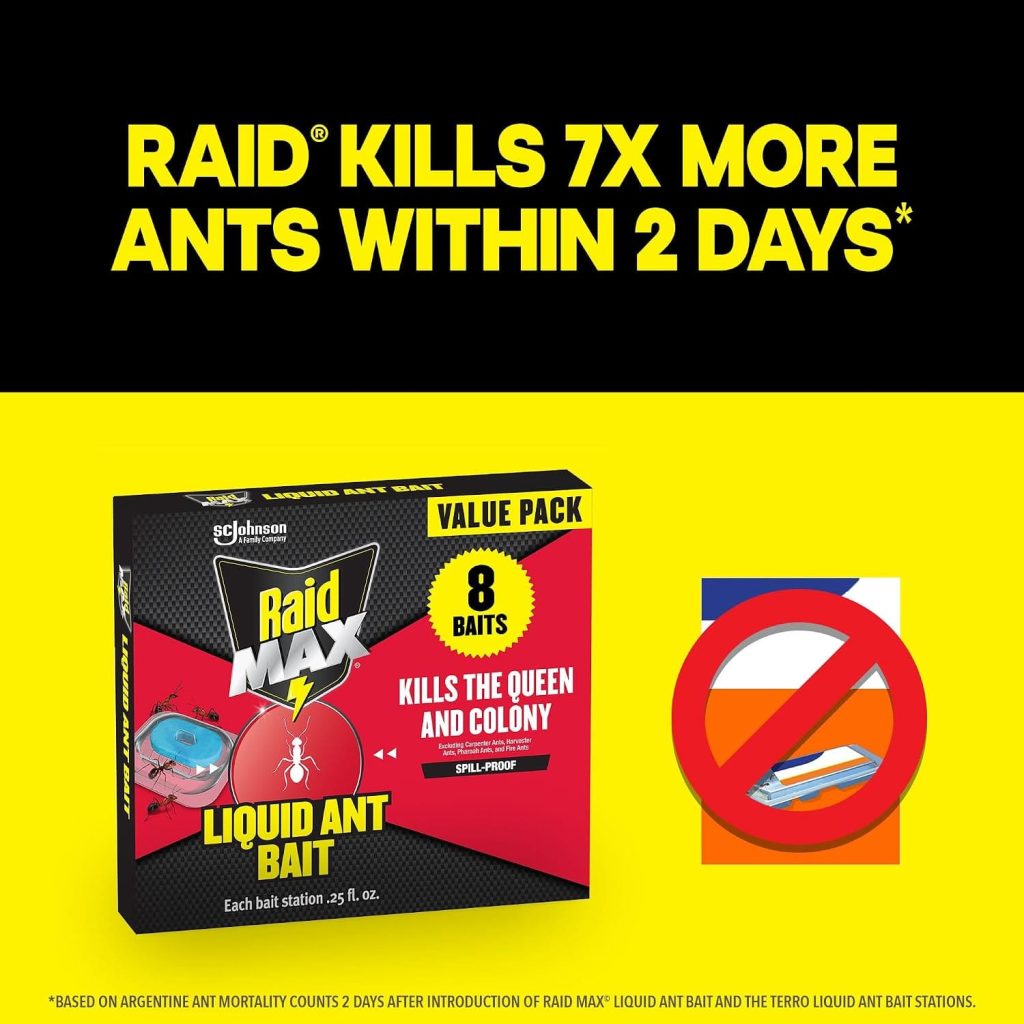
Raid uses a different active ingredient: spinosad at 0.015%.
Which is better?
I would not choose only by brand name.
I would look at:
- the ant species
- label directions
- placement options
- whether I need indoor or outdoor treatment
- how many stations I need
TERRO has dedicated indoor, outdoor, stake, and multi-surface options.
Raid’s current Max Liquid Ant Bait is very straightforward for common indoor ant trails.
Raid MAX or Combat Max?
Combat Max is interesting because its current official page clearly labels it for both indoor and outdoor use.
It contains fipronil.
It comes with six bait stations.
Combat says the stations can provide ant-killing power for up to three months and recommends replacing them after three months, or sooner for continuous control.
Combat also lists fire ants among its target species.
That creates a major difference.
Raid MAX Liquid Ant Baits specifically exclude fire ants.
So if someone told me:
“I definitely have fire ants,”
I would immediately remove Raid MAX from this comparison for that job.
If the problem were common sweet-feeding household ants inside the kitchen, Raid would remain a reasonable option.
This is why matching the product to the pest is more important than asking which brand is “stronger.”
Raid MAX or Hot Shot Ultra Liquid?
Hot Shot Ultra Liquid Ant Bait also uses a liquid food-and-water approach.
The company says its liquid bait technology combines a food source and water source while delivering a lethal dose, with a 24-hour kill claim.
Raid also says listed ants can be killed within 24 hours after the bait starts being used.
So both products compete in a similar area.
For me, the next question would again be:
Which ants does the exact label cover?
That is more useful than choosing based on a large “24 HOURS” statement on the package.
🌿 Indoor and Outdoor Confusion Explained
This deserves its own section because the product title you provided says:
Indoor and Outdoor Use.
Current Amazon and Walmart listings also use indoor/outdoor wording for an eight-count Raid MAX Liquid Ant Bait listing.
However, Raid’s current official page for the original Max Liquid Ant Baits lists indoor use locations and says customers with outdoor ant problems should look at the separate Raid outdoor bait product.
That means I would not make a blanket statement that every current Raid MAX Liquid Ant Bait station should be placed outdoors.
Pesticide labels control how the product is legally and safely used.
So when the package arrives:
Read the directions on that exact package.
If your package clearly states outdoor use, follow its outdoor instructions.
If it only lists indoor sites, use it indoors.
Do not decide based only on an online product title.
🗑️ Disposal Is Simple but Important
Once the ant problem is controlled, Raid says to remove the bait stations and dispose of them according to the product instructions.
The stations are non-refillable.
Do not reuse them.
Do not refill them.
If empty, Raid says they can go in the trash or recycling where available.
If product remains inside, follow local disposal guidance.
Most importantly, Raid says unused bait should never be poured down an indoor or outdoor drain.
That is an easy rule to remember.
Do not open the station and pour leftover pesticide into the sink.
📍 Where I Would Place the Eight Stations
If I were planning placement in a typical home, I would first spend a little time observing the ants.
I would not instantly open all eight.
I would identify the main activity zones first.
For example:
Kitchen Station 1
Along the baseboard where the trail first appears.
Kitchen Station 2
Near the gap behind an appliance if ants are entering there.
Sink Area
Near plumbing where ants are repeatedly seen, but away from splashing water.
Pantry
Near the ant trail, not directly touching stored food.
Window Area
Near an active entry route while avoiding strong direct sun.
Bathroom
Near a plumbing area if moisture ants or other listed ants are active there.
Waste Area
Near the path ants use around a trash container.
Second Entry Point
Use the final station where another active trail is visible.
Those are examples only. The actual placement should follow the product label and your home’s ant activity. Raid recommends using stations where ants are seen and using additional stations for larger or more severe infestations.
What I Would Change About Raid MAX Liquid Ant Bait
I Would Make Indoor/Outdoor Labeling Clearer
The biggest issue I found during research was not the bait formula.
It was product-listing clarity.
A buyer should not have to wonder whether an eight-pack can be used outside.
Retailer titles and Raid’s current official instructions should make this completely clear.
I Would Like Broader Ant Coverage
Fire ants and carpenter ants are important exclusions.
A customer who does not know the species may buy the wrong bait.
A broader bait would be more convenient.
I Would Like a Clear Visible Bait-Level Window
With liquid products, it is useful to see how much bait remains.
Any design that makes the remaining amount easier to check is helpful.
I Would Add Better Ant Identification Guidance
A simple chart on the package showing:
- covered species
- excluded species
- common appearance
- common location
would help many buyers.
Common Mistakes I Would Avoid
Killing Every Ant Near the Bait Immediately
The workers need time to carry bait away.
Putting Bait Far Away From the Trail
Place it where ants are active.
Leaving Competing Food Everywhere
Crumbs and sweet spills may compete with the bait.
Using It Against an Excluded Species
Fire ants, carpenter ants, harvester ants, and pharaoh ants are specifically excluded.
Putting the Station in Strong Sun
Heat and sunlight can increase evaporation.
Putting It Where a Pet Can Play With It
Raid specifically warns against allowing children or pets to play with the bait station.
Pouring Leftover Bait Down the Drain
Do not do this. Follow disposal instructions.
How Long Should You Give It?
This is where patience matters.
Raid says the bait can begin attracting ants within about ten minutes when ants are present and can kill listed ants within 24 hours.
But colony reduction should not be confused with the death of one ant.
If activity continues, I would watch the overall trend.
Are fewer ants appearing?
Is the main trail becoming smaller?
Are they still feeding from the station?
A colony problem may need more time than a contact spray result.
For a very heavy infestation, Raid recommends additional bait stations.
If the problem does not improve after correct placement and label use, I would reconsider the ant species or consider professional pest control.
Does It Replace Professional Pest Control?
Not always.
For a normal line of common household ants, a consumer bait may be enough.
But I would think differently if I saw:
- a very large infestation
- repeated infestations despite treatment
- suspected carpenter ants
- ants coming from structural wood
- ants around electrical systems
- a species I cannot identify
- a situation where bait cannot be placed safely
In those cases, professional help may be a better choice.
The best pest-control product is not always the strongest chemical.
Sometimes the best solution is knowing when a problem is larger than a simple household bait can handle.
Final View
Raid MAX Liquid Ant Bait makes sense because it does something more useful than simply killing the ants walking across your countertop.
Its design is built around the colony.
Worker ants find the liquid.
They consume it.
They carry it back.
The bait can then reach other workers, larvae, and the queen. Raid uses 0.015% spinosad and says the bait can begin attracting listed ants within about ten minutes when ants are present, with listed ants killed within 24 hours.
I also like the convenience.
There is no measuring.
There is no mixing.
There is no spray cloud.
You activate the station and place it where ants are active, following the package directions.
The eight-count package gives you enough stations to address several trails or rooms.
The biggest weakness is species coverage.
This is not the bait I would choose for fire ants, carpenter ants, harvester ants, or pharaoh ants.
The indoor/outdoor wording also needs attention. Retailers currently sell an eight-count product using indoor/outdoor language, while Raid’s current official Max Liquid Ant Baits page directs outdoor problems to a separate outdoor product. Always follow the exact label on the package you receive.
For listed common household ants, however, the design is practical.
It targets more than the ants you can see.
It lets worker ants do part of the delivery work.
And it gives homeowners a simple bait-based option without requiring complicated preparation.
Overall, I would consider Raid MAX Liquid Ant Bait a strong option for common indoor ant trails when the species is covered by the label and the stations can be placed safely and correctly.